Monday, 7 January 2019

Sunday, 6 January 2019

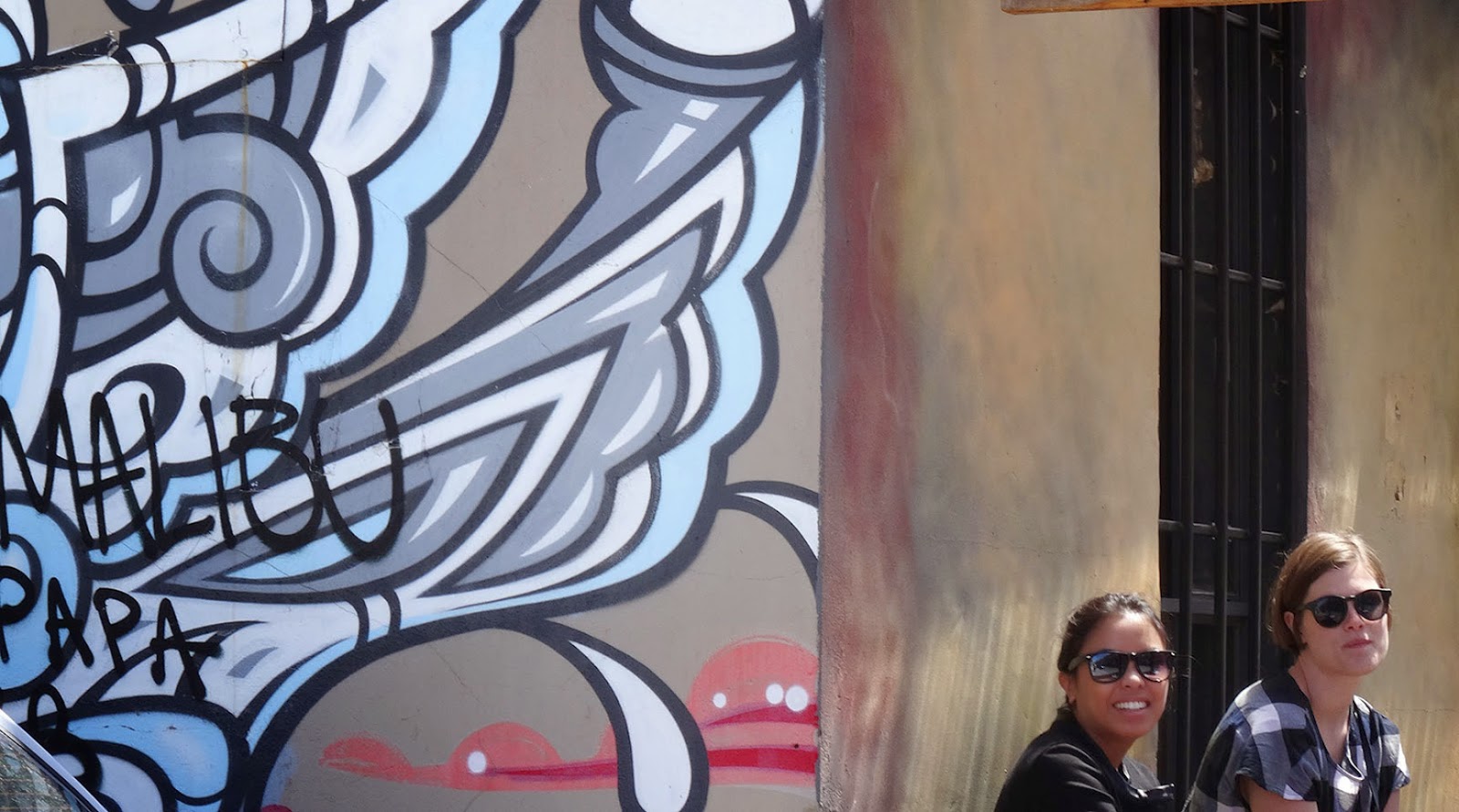
IN FITZROY

Fitzroy is a suburb of Melbourne, Australia, 2 km north-east of Melbourne's Central Business District. At the 2011 Census, Fitzroy had a population of 9,430. Planned as Melbourne's first suburb, it was later also one of the city's first areas to gain municipal status. It occupies Melbourne's smallest and most densely populated suburban area, just 100 Ha, bordered by Alexandra Parade (north), Victoria Parade (south), Smith Street (east) and Nicholson Street.

Fitzroy has a long associations with the working class and is currently inhabited by a wide variety of ethnicities and socio-economic groups and is known for a culture of bohemianism, being the main home of Melbourne's Fringe Festival. Its commercial heart is Brunswick Street, which is one of Melbourne's major retail, eating, and entertainment strips. It has undergone waves of both urban renewal and gentrification since the 1950s. In response to past planning practices, much of the suburb is now a historic preservation precinct, with many individual buildings and streetscapes covered by Heritage Overlays. Its built environment is diverse and features some of the finest examples of Victorian era architecture in Melbourne.

This post is part of the My Sunday Best meme,
and also part of the Weekend Reflections meme.


Friday, 4 January 2019

HEATWAVE

Today we experienced blistering hot temperatures in Melbourne, just as the weatherman predicted. However, as is often the case with Melbourne's heat, we experienced relief from a cool change. Melbourne’s hottest day in five years suddenly became almost chilly as a fierce cold front crashed through the city. The CBD recorded a maximum temperature of 42.6˚C at 3.41pm and was still at 42˚C by 4pm. Police said five children had to be rescued from locked cars. Then, in the space of 30 minutes, the mercury plunged by 20˚ to 22˚C — below average for this time of year.

This post is part of the Skywatch Friday meme,
and also part of the Friday Photo Journal meme.
Look at that crazy temperature chart line in red, climbing to over 40˚C and then dropping to 22˚C in a matter of minutes as the change sweeps through.

Early morning hot sun and clear skies, with the temperature climbing quickly.

As the change and clouds roll in, the temperature plummets. Never a dull moment in Melbourne!

Thursday, 3 January 2019

KANGAROO PAW

Anigozanthos is a small genus of Australian plants in the Bloodwort family Haemodoraceae. The 11 species and several subspecies are commonly known as kangaroo paw and catspaw depending on the shape of their flowers. A further species, previously identified as Anigozanthos fuliginosus and commonly known as the black kangaroo paw, has been transferred to its own monotypic genus and is now known as Macropidia fuliginosa.

The genus was first named by Jacques Labillardière in his work, Relation du Voyage à la Recherche de la Pérouse, issued in 1800. The French botanist collected and described the type species, Anigozanthus rufus, during the d'Entrecasteaux expedition's visit to Southwest Australia in 1792. In recent years a number of numerous hybrids and cultivars have been developed. Kangaroo paws are much in demand as house plants and as cut flowers.

These perennials are endemic to dry sandy, siliceous areas of southwest Australia, but they occur as well in a variety of other environments and soil types. They are grown commercially in Australia, the United States, Japan and Israel. The plant grows from short, underground, horizontal rhizomes. The length and the character of these may vary between the species: Some are fleshy, others are fragile. The sap in the root system allows the plants to survive extreme dry spells. In summer, a number of species die back to the rhizome, growing back in autumn.

The tuberous flower buds are covered with coloured hairs, giving them a velvety aspect. These long furry hairs also determine the colour of the flower, which may range from almost black to yellow, orange and red. Some species are even dichromatic (as Anigozanthos manglesii). The tubular form of the flower bud resembles a kangaroo paw, hence its name. The flower tip spreads fanlike into six petals. Full-grown plants can have up to ten flowers at the end of each stalk.

These are from our garden and they are in bloom currently in  Melbourne.

This post is part of the Floral Friday Fotos meme.


Wednesday, 2 January 2019

ZEN

A corner of our garden where a meditating Buddha encourages us to be calm and relaxed, taking city life in our stride.

Zen (also Zen Buddhism) noun [mass noun] is a Japanese school of Mahayana Buddhism emphasising the value of meditation and intuition rather than ritual worship or study of scriptures.

Zen Buddhism was introduced to Japan from China in the 12th century, and has had a profound cultural influence. The aim of Zen is to achieve sudden enlightenment (satori) through meditation in a seated posture (zazen), usually under the guidance of a teacher and often using paradoxical statements (koans) to transcend rational thought.

ORIGIN Japanese, literally ‘meditation’, from Chinese chán ‘quietude’, from Sanskrit dhyāna ‘meditation’.

This post is part of the Wordless Wednesday meme,
and also part of the ABC Wednesday meme,
and also part of the Nature Notes meme.

Monday, 31 December 2018

Sunday, 30 December 2018

SUNSET SILHOUETTES

Every ending has within it the seeds of a new beginning. Look forward to what will be, while remembering what has gone by, but don't dwell in the past. The brightness of the future depends on how well we nurture the candle of the present moment. Cherish the present while acknowledging that it has as its foundation the past, and build solidly now that you may dwell securely on the tall towers of tomorrow.

This post is part of the My Sunday Best meme,
and also part of the My Sunday Photo meme.

Saturday, 29 December 2018

COCKATOO

The sulphur-crested cockatoo (Cacatua galerita) is a relatively large white cockatoo found in wooded habitats in Australia, and New Guinea and some of the islands of Indonesia. They can be locally very numerous, leading to them sometimes being considered pests. A highly intelligent bird, they are well known in aviculture, although they can be demanding pets.

In Australia, sulphur-crested cockatoos can be found widely in the north and east, ranging from the Kimberley to as far south as Tasmania, but avoiding arid inland areas with few trees. They are numerous in suburban habitats in cities such as Adelaide, Melbourne, Canberra, Sydney and Brisbane. Except for highland areas, they occur throughout most of New Guinea and on nearby smaller islands such as Waigeo, Misool and Aru, and various islands in the Cenderawasih Bay and Milne Bay.

It has a total length of 44–55 cm, with the Australian subspecies larger than subspecies from New Guinea and nearby islands. The plumage is overall white, while the underwing and -tail are tinged yellow. The expressive crest is yellow. The bill is black, the legs are grey, and the eye-ring is whitish. Males typically have almost black eyes, whereas the females have a more red or brown eye, but this requires optimum viewing conditions to be seen.

Their distinctive raucous call can be very loud; it is adapted to travel through the forest environments in which they live, including tropical and subtropical rainforests. These birds are naturally curious, as well as very intelligent. They have adapted very well to European settlement in Australia and live in many urban areas.

This post is part of the Saturday Critters meme.