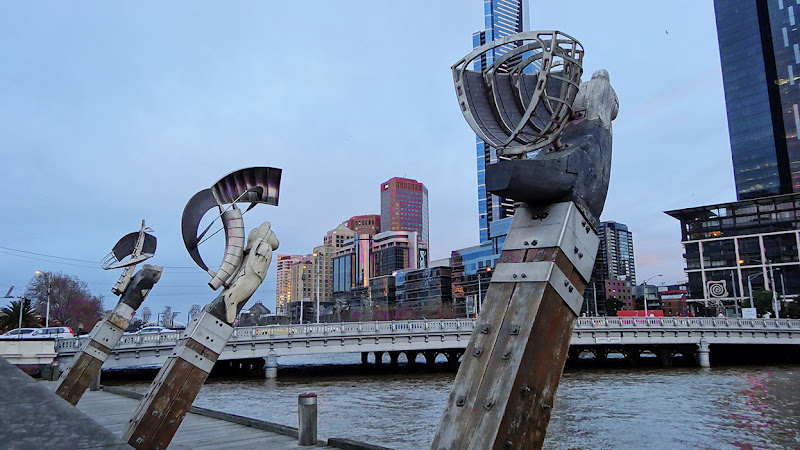
A few views of the Melbourne City skyline looking towards the West from up high... These are views taken from the top floor of the Myer Department store.
This post is part of the Our World Tuesday meme.
Tuesday, 21 August 2012
Monday, 20 August 2012
UNION LANE GRAFFITI
Union Lane is an alley running between the Bourke St Mall and Little Collins St in the CBD. It represents an area of 560 square metres of wall that were painted in 2010 by about 70 artists from Melbourne, Perth, Glasgow, Auckland and even San Salvador. Melbourne City Council commissioned this new artwork in 2010. The artists repainted the entire lane in over 5 months. Unfortunately much of the artwork has now become trashed by silly tags and inane defacement. Painting in Union Lane is illegal unless authorised by permit at the Council. The defacing tags and scrawls are obviously not authorised and have destroyed some really nice art.
Sunday, 19 August 2012
MOST LIVEABLE CITY IN THE WORLD
Melbourne has once again been voted by the Economist Intelligence Unit “The Most Liveable City” in the world for the second year in succession. On and off it has been up there with the best of them for several years now and it has been declared the best to live in several times in the past. The concept of liveability assesses which locations around the world provide the best or the worst living conditions. One can perhaps understand it if one compares Melbourne to some of the cities that did not do so well in the list: Karachi, Algiers, Harare, Lagos, Port Moresby and Dhaka.
Liveability relates to standards of living, facilities available, personal safety, crime rate, resources and services, cost of living, housing, public transport, health care, cultural events, open spaces and parks, sporting facilities, etc. The top ten most liveable cities in the world are: 1. Melbourne, Australia; 2. Vienna, Austria; 3. Vancouver, Canada; 4. Toronto, Canada; 5. Calgary, Canada; 5. Adelaide, Australia; 7. Sydney, Australia; 8. Helsinki, Finland; 9. Perth, Australia; 10. Auckland, New Zealand.
This post is part of the Sunday Bridges meme,
and also part of the Scenic Sunday meme.
Liveability relates to standards of living, facilities available, personal safety, crime rate, resources and services, cost of living, housing, public transport, health care, cultural events, open spaces and parks, sporting facilities, etc. The top ten most liveable cities in the world are: 1. Melbourne, Australia; 2. Vienna, Austria; 3. Vancouver, Canada; 4. Toronto, Canada; 5. Calgary, Canada; 5. Adelaide, Australia; 7. Sydney, Australia; 8. Helsinki, Finland; 9. Perth, Australia; 10. Auckland, New Zealand.
This post is part of the Sunday Bridges meme,
and also part of the Scenic Sunday meme.
Saturday, 18 August 2012
EXHIBITION BUILDING BY NIGHT
The Royal Exhibition Building is a World Heritage Site-listed building in Melbourne, Australia, completed in 1880. It is located at 9 Nicholson Street in the Carlton Gardens, at the north-eastern edge of the central business district. It was built to host the Melbourne International Exhibition in 1880-1881 and later hosted the opening of the first Parliament of Australia in 1901.
Throughout the 20th century smaller sections and wings of the building were subject to demolition and fire, however the main building, known as the Great Hall, survived.It received restoration throughout the 1990s and in 2004 became the first building in Australia to be awarded UNESCO World Heritage status, being one of the last remaining major 19th century exhibition buildings in the world. Today, the building hosts various exhibitions and other events and is closely tied with events at the Melbourne Museum.
The colossal Hochgurtel Fountain stands some ten metres high on the south side of the Royal Exhibition Building, outside the Great Hall. It was constructed for the first of Melbourne's two grand international world fairs. The fountain's visual elements were designed to display the young colony's confidence and advancement, simultaneously signalling the purpose of world fairs to display the produce and industry of nations. In 1994, Hochgurtel's fountain underwent major restoration. It remains a great reminder of the glorious days of Marvellous Melbourne.
This post is part of the Weekend Reflections meme,
and also part of the Weekly TopShot meme.
Throughout the 20th century smaller sections and wings of the building were subject to demolition and fire, however the main building, known as the Great Hall, survived.It received restoration throughout the 1990s and in 2004 became the first building in Australia to be awarded UNESCO World Heritage status, being one of the last remaining major 19th century exhibition buildings in the world. Today, the building hosts various exhibitions and other events and is closely tied with events at the Melbourne Museum.
The colossal Hochgurtel Fountain stands some ten metres high on the south side of the Royal Exhibition Building, outside the Great Hall. It was constructed for the first of Melbourne's two grand international world fairs. The fountain's visual elements were designed to display the young colony's confidence and advancement, simultaneously signalling the purpose of world fairs to display the produce and industry of nations. In 1994, Hochgurtel's fountain underwent major restoration. It remains a great reminder of the glorious days of Marvellous Melbourne.
This post is part of the Weekend Reflections meme,
and also part of the Weekly TopShot meme.
Friday, 17 August 2012
FOG IN MELBOURNE
Fog is a collection of liquid water droplets or ice crystals suspended in the air at or near the Earth's surface. While fog is a type of stratus cloud, the term "fog" is typically distinguished from the more generic term "cloud" in that fog is low-lying, and the moisture in the fog is often generated locally (such as from a nearby body of water, like a lake or the ocean, or from nearby moist ground or marshes). Fog is distinguished from mist only by its density, as expressed in the resulting decrease in visibility: Fog reduces visibility to less than 1 km, whereas mist reduces visibility to no less than 1 km . For aviation purposes in the UK, a visibility of less than 5 km but greater than 999 m is considered to be mist if the relative humidity is 70% or greater – below 70% haze is reported.
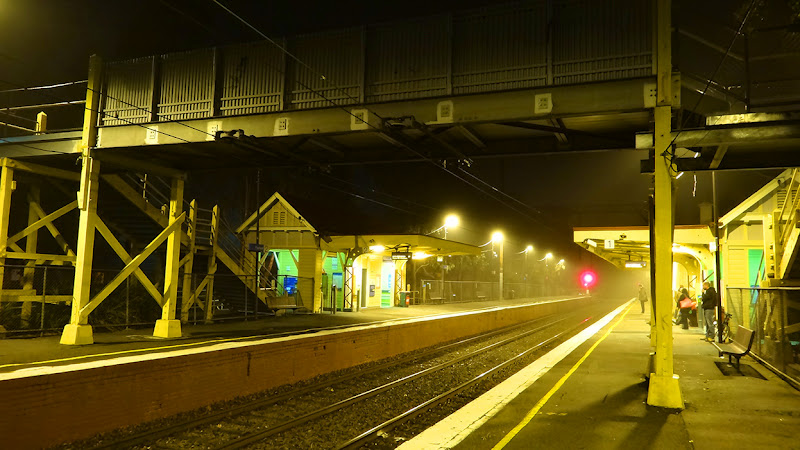
We don't often experience fog in Melbourne, but occasionally it does blanket the city in winter as it did earlier this week. It can give opportunity for some nice photos. They are from my local train station early in the morning, then the Southern Cross station in the city and then while walking to work up Bourke St.
You can find more of my photos in the fog from last year, here.
This post is part of the Skywatch Friday meme.
We don't often experience fog in Melbourne, but occasionally it does blanket the city in winter as it did earlier this week. It can give opportunity for some nice photos. They are from my local train station early in the morning, then the Southern Cross station in the city and then while walking to work up Bourke St.
You can find more of my photos in the fog from last year, here.
This post is part of the Skywatch Friday meme.
Thursday, 16 August 2012
LITTLE WILLIAM ST, CITY
Melbourne is a relatively clean city and it is a pleasure to walk through its streets. This is especially relevant in the CBD where huge numbers of people congregate both day and night. As I was walking at lunchtime, I cut through Little William St between Bourke and Little Bourke St, just East of William St. I found the amusing sign that I just had to photograph as obviously the shop-owners of the area had had enough, and the "Clean City" rule obviously had an exception...
The domed building in the distance is the Victorian Supreme Court. More of that in a future post.
This post is part of Lesley's Signs, Signs meme.
The domed building in the distance is the Victorian Supreme Court. More of that in a future post.
This post is part of Lesley's Signs, Signs meme.
Wednesday, 15 August 2012
MERRI CREEK, EAST BRUNSWICK
The Merri Creek is a waterway in southern parts of Victoria, Australia which flows through the northern suburbs of Melbourne. It begins in Wallan north of Melbourne and flows south for 70km until it joins the Yarra River at Dights Falls. The area where the creek meets the river was traditionally the location for large gatherings of the Wurundjeri people and is suspected to have been the location for one of the earliest land treaties in Australia between Indigenous Australians and European settlers.
The creek was the site of heavy industrial use throughout much of the 20th century, being home to quarries, landfills and accepting waste runoff from neighbouring factories. This has degraded the riparian ecology of the creek leaving behind pollutants such as heavy metals and various greases. Recent decades have seen some regenerative planting and the foundation of several community groups dedicated to protecting and regenerating the creek's ecology.
This post is part of the Water World Wednesday meme,
and also part of the Outdoor Wednesday meme,
and also part of the Nature Footsteps Waters meme.
The creek was the site of heavy industrial use throughout much of the 20th century, being home to quarries, landfills and accepting waste runoff from neighbouring factories. This has degraded the riparian ecology of the creek leaving behind pollutants such as heavy metals and various greases. Recent decades have seen some regenerative planting and the foundation of several community groups dedicated to protecting and regenerating the creek's ecology.
This post is part of the Water World Wednesday meme,
and also part of the Outdoor Wednesday meme,
and also part of the Nature Footsteps Waters meme.
Tuesday, 14 August 2012
MELBOURNE UNIVERSITY - MEDICAL HISTORY MUSEUM 2
When visiting the University of Melbourne Medical Museum recently I was intrigued to see exhibited there a brass plaque commemorating the death in 1910 of a University of Melbourne Medical School student. He was Canute Henry Clowes (died 1910). The arrow points him out in this detail from a photograph of fifth year medical students in 1910, also on exhibition in the museum.
No degree exists to acknowledge Canute Henry Clowes’ Medical Course. He died soon after the final exams in 1910. There are records of his death at his home in Tylden, Victoria, on the 27th of December 1910, contrary to what the plaque states. He had one more exam to sit that was to be held in March 1911. The Argus newspaper of Melbourne on Wednesday 4 March 1908, carried the notice that Canute Henry Clowes passed a supplementary examination in Anatomy. Remarkably little else can be found about Canute Henry Clowes' life or cause of death on the web...
He is buried in Tylden Cemetery (the photo is from the webpage of the cemetery that you can find here and it lists him as interred in the one of the graves there). The photo of the cemetery is from the website. Tylden is a small country town in central Victoria, Australia in the Shire of Macedon Ranges Local Government Area, 83 kilometres north-west of Melbourne. At the 2006 census, Tylden has a population of 350. Tylden Post Office opened on 7 January 1860.
This post is part of Julie's Taphophile Tragics meme.
No degree exists to acknowledge Canute Henry Clowes’ Medical Course. He died soon after the final exams in 1910. There are records of his death at his home in Tylden, Victoria, on the 27th of December 1910, contrary to what the plaque states. He had one more exam to sit that was to be held in March 1911. The Argus newspaper of Melbourne on Wednesday 4 March 1908, carried the notice that Canute Henry Clowes passed a supplementary examination in Anatomy. Remarkably little else can be found about Canute Henry Clowes' life or cause of death on the web...
He is buried in Tylden Cemetery (the photo is from the webpage of the cemetery that you can find here and it lists him as interred in the one of the graves there). The photo of the cemetery is from the website. Tylden is a small country town in central Victoria, Australia in the Shire of Macedon Ranges Local Government Area, 83 kilometres north-west of Melbourne. At the 2006 census, Tylden has a population of 350. Tylden Post Office opened on 7 January 1860.
This post is part of Julie's Taphophile Tragics meme.
Monday, 13 August 2012
ROYAL MELBOURNE HOSPITAL - TAPESTRY
This tapestry hangs in the foyer of the Royal Melbourne Hospital (RMH) is the second to be commissioned for the ‘Delacombe Tapestry Project’, an initiative set up by the Tapestry Foundation of Australia as a tribute to Lady Delacombe, wife of the former Governor of Victoria, who was instrumental in the establishment of the Australian Tapestry Workshop (ATW) in 1976.
The tapestry represents a collaboration between the Victorian College of the Arts, The Royal Melbourne Hospital and the ATW. The designing artist, Merrin Eirth, completed a three-month residency at the RMH to create the artwork for this tapestry, which reflects her perceptions of the hospital environment, and the sounds, sights and values that surrounded her during that time.
"Healing Threads" - 2007 by artist Merrin Eirth. 2 x 4 metres. Weavers: Chris Cochius, Louise King, Rebecca Moulton, Emma Sulzer.
This post is part of the Monday Mural meme,
and also part of the Mellow Yellow Monday meme.
The tapestry represents a collaboration between the Victorian College of the Arts, The Royal Melbourne Hospital and the ATW. The designing artist, Merrin Eirth, completed a three-month residency at the RMH to create the artwork for this tapestry, which reflects her perceptions of the hospital environment, and the sounds, sights and values that surrounded her during that time.
"Healing Threads" - 2007 by artist Merrin Eirth. 2 x 4 metres. Weavers: Chris Cochius, Louise King, Rebecca Moulton, Emma Sulzer.
This post is part of the Monday Mural meme,
and also part of the Mellow Yellow Monday meme.
Sunday, 12 August 2012
ST JOHN'S CHURCH, SOUTHGATE
St John's Southgate is a small, modern Lutheran church located in the Southgate Complex. It replaces the previous worship centre built in 1927 and demolished in 1989 to make way for the Southgate complex.The organ in the Baroque style (suitable for Bach - that great Lutheran) was built by local organ builder Knud Smenge.The church has a strong emphasis on the arts and is heavily used for exhibitions, concerts and recitals.
The beautiful, modern church building was designed by David Cole, an architect from Buchan, Laird and Bawden.The design of the church links architecturally with the Southgate complex. The Lutheran church is one of the major Christian churches, and the largest Protestant church. There are more than sixty million Lutherans in the world, traditionally mainly within northern Europe and the USA. Currently, the fastest growing Lutheran population is in Africa, with more than 14 million members. Ethiopia, Tanzania, Malawi and Cameroon have substantial Lutheran memberships. In Australia and New Zealand 250,000 people call themselves Lutheran.
This post is part of the Sunday Psalm meme,
and also part of the Spiritual Sunday meme.
And here is a magnificent organ piece by J.S. Bach. It is his "Little" Fugue in G Minor, BWV578.
The beautiful, modern church building was designed by David Cole, an architect from Buchan, Laird and Bawden.The design of the church links architecturally with the Southgate complex. The Lutheran church is one of the major Christian churches, and the largest Protestant church. There are more than sixty million Lutherans in the world, traditionally mainly within northern Europe and the USA. Currently, the fastest growing Lutheran population is in Africa, with more than 14 million members. Ethiopia, Tanzania, Malawi and Cameroon have substantial Lutheran memberships. In Australia and New Zealand 250,000 people call themselves Lutheran.
This post is part of the Sunday Psalm meme,
and also part of the Spiritual Sunday meme.
And here is a magnificent organ piece by J.S. Bach. It is his "Little" Fugue in G Minor, BWV578.
Subscribe to:
Posts (Atom)