Tuesday, 16 April 2024
SASSAFRAS
Wednesday, 3 April 2024
EUCALYPTS
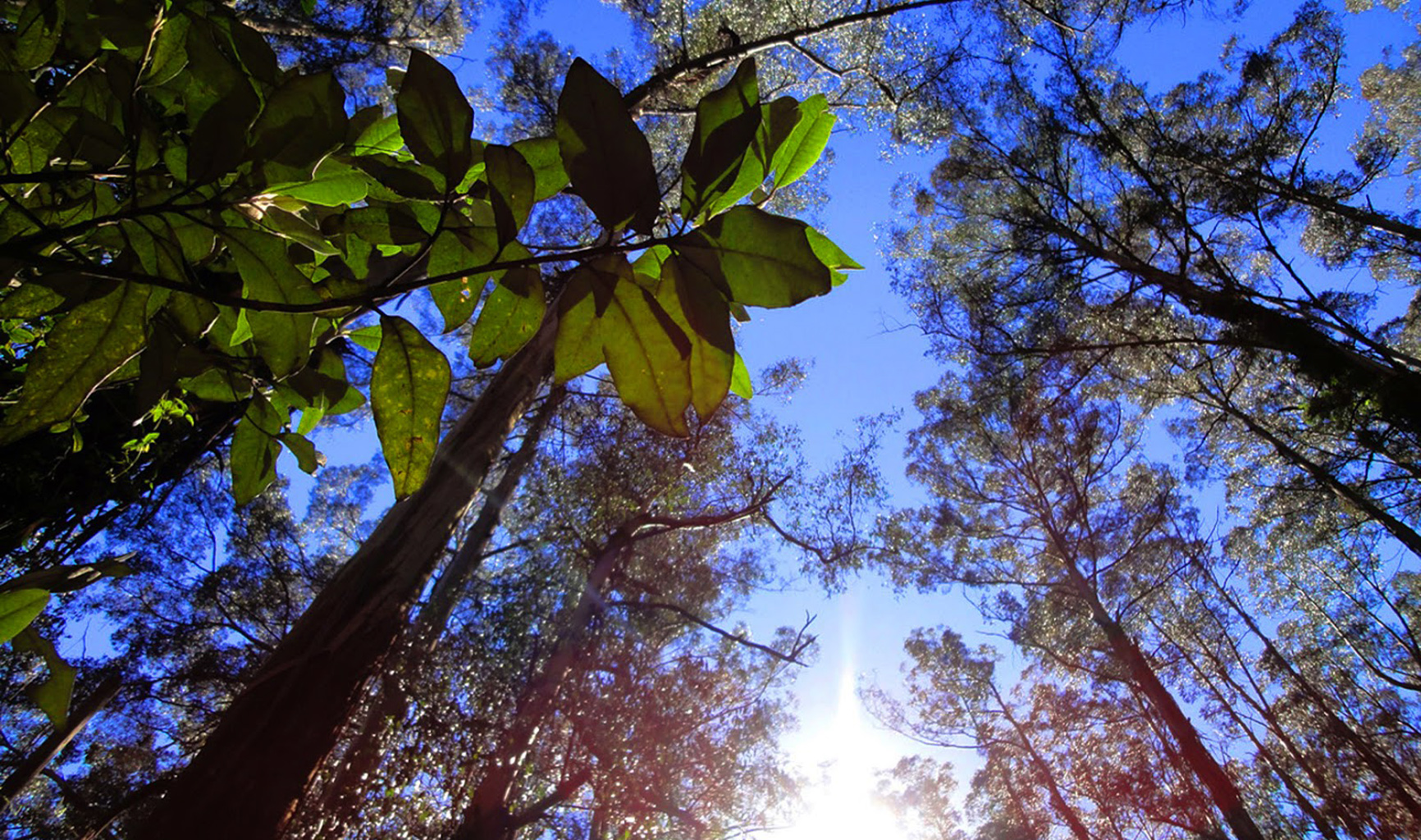
Eucalyptus is a genus of more than 700 species of flowering plants in the family Myrtaceae. Most species of Eucalyptus are trees, often mallees, and a few are shrubs. Along with several other genera in the tribe Eucalypteae, including Corymbia and Angophora, they are commonly known as eucalypts or "gum trees".
Plants in the genus Eucalyptus have bark that is either smooth, fibrous, hard or stringy, the leaves have oil glands, and the sepals and petals are fused to form a "cap" or operculum over the stamens. The fruit is a woody capsule commonly referred to as a "gumnut". Eucalypt trees are the tallest flowering plants on the planet.
Most species of Eucalyptus are native to Australia, and every state and territory has representative species. About three-quarters of Australian forests are eucalypt forests. Many eucalypt species have adapted to wildfire, and are able to resprout after fire or have seeds which survive fire. A few species are native to islands north of Australia and a smaller number are only found outside the continent.
Eucalypts have been grown in plantations in many other countries because they are fast growing and have valuable timber, or can be used for pulpwood, for honey production or essential oils. In some countries, however, they have been removed because of the danger of forest fires due to their high flammability.
This post is part of the Wordless Wednesday meme
and also part of the Nature Notes meme.
Tuesday, 2 April 2024
ON MT DANDENONG
Mount Dandenong, sometimes styled as Mt. Dandenong, is a township and suburb of the Greater Melbourne area in Victoria, Australia, 44 km east of the Melbourne central business district (CBD), located within the local government area of the Shire of Yarra Ranges.
Mount Dandenong recorded a population of 1,271 at the 2021 census. Light to moderate snowfalls occur on Mount Dandenong a few times most years, mostly frequently between late winter and late spring. The area around Mount Dandenong experienced a highly unusual summer snow fall on Christmas Day 2006.
This post is part of the Travel Tuesday meme
Sunday, 31 March 2024
IN THE BOOKSHOP
Wednesday, 26 April 2023
HIGH AND MIGHTY
and also part of the My Corner of the World meme,
and also part of the Nature Notes meme.
Thursday, 17 March 2022
PINK HYACINTH ORCHID
Dipodium roseum, commonly known as pink hyacinth orchid, in the family Orchidaceae is a leafless mycoheterotrophic orchid found in east and south-eastern Australia. The species was formally described in 1991. The type specimen was collected in Montrose in Victoria's Dandenong Ranges. The species was previously included in a wider circumscription of Dipodium punctatum.
For most of the year, plants are dormant and have no above-ground presence. Below the ground lie fleshy roots. Flower spikes ranging from 30 to 90 cm in height appear between December and April. These racemose inflorescences have 15 to 40 pink flowers with small darker spots. The sepals and petals are strongly recurved and the three-lobed labellum is pink with dark lines and a band of mauve hairs. A rare white-flowering form also exists.
Pollination of this species, as for all species in the genus, is by native bees and wasps. No leafless species of Dipodium has been sustained in cultivation due to the inability to replicate its association with mycorrhizal fungi in a horticultural context. I.e. it needs the wild underground fungi to nourish it as it has no leaves and cannot photosynthesise.
This post is part of the Floral Friday Fotos meme
Tuesday, 8 December 2020
EARLY SUMMER
Thursday, 13 September 2018
RHODODENDRON
Tuesday, 4 September 2018
TULIP TIME IN MELBOURNE
Friday, 15 December 2017
SUMMER IN THE DANDENONGS
After European settlement in the region, the ranges were used as a main source of timber for Melbourne. They were popular with day-trippers from the 1870s onwards. Much of the Dandenongs were protected by parklands as early as 1882 and by 1987 these parklands were amalgamated to form the Dandenong Ranges National Park, which was added to again in 1997. The ranges experience light to moderate snow falls a few times most years, frequently between late winter and late spring. In Summer the temperature is several degrees lower than that at Melbourne and the dense vegetation is luxuriant.
Today, the Dandenongs are home to over 100,000 residents and the area is popular amongst visitors, many of which stay for the weekend at the various Bed & Breakfasts through the region.
This post is part of the Skywatch Friday meme,
and also part of the Friday Photo Journal meme,
and also part of the Weekend Green meme.
Sunday, 4 September 2016
TREES IN THE DANDENONGS
Wednesday, 20 April 2016
OLINDA, DANDENONGS
"The Loft In The Mill" is a magnificent bluestone replica of an old flour mill with adjacent stone carriage house. It is located at 1602 Mt Dandenong Tourist Rd in Olinda, located in the middle of Olinda Village: Walking distance to boutique shops; lovely gardens, galleries and tearooms; and quality restaurants. A short distance away is the local golf course, and William Ricketts Sanctuary. 15 minutes away is Puffing Billy Railway or the Yarra Valley's numerous wineries.
This post is part of the Outdoor Wednesday meme,
and also part of the Wordless Wednesday meme,
and also part of the ABC Wednesday meme,
and also part of the Travel Tuesday meme.
Sunday, 6 March 2016
DANDENONGS KOOKABURRAS
It is quite lovely to live up there amongst the lush greenery and wonderful trees, but there is always the risk of bushfires and anyone who lives there must have a well-coordinated fire plan. Needless to say that many of the residents are volunteer firefighters too.
The area is full of native flora and fauna and the birdlife in particular is quite diverse and spectacular. Below are some photos of some kookaburras that frequently come in to feed at one of our friends' place there.
Kookaburras are terrestrial tree kingfishers of the genus Dacelo native to Australia and New Guinea, which grow to between 28–42 cm in length. The name is a loanword from Wiradjuri "guuguubarra", onomatopoeic of its call. The single member of the genus Clytoceyx is commonly referred to as the shovel-billed kookaburra. The kookaburra's loud call sounds like echoing human laughter. They are found in habitats ranging from humid forest to arid savanna, as well as in suburban areas with tall trees or near running water. Even though they belong to the larger group known as "kingfishers", kookaburras are not closely associated with water.
This post is part of the Scenic Weekends meme,
and also part of the Saturday Critters meme,
and also part of the Camera Critters meme.
Thursday, 3 March 2016
GLORIOUS CLOUDEHILL
The garden is highlighted by delightful herbaceous borders which focus on two of the finest Japanese weeping maples to be seen anywhere in the world. There is a cafe on site offering a wide selection of dishes and with views into the heart of the garden and to the mountains beyond, it is a perfect place to spend a lazy afternoon, or the perfect place for a Summer wedding!
The nursery provides a range of the plants to be seen in the gardens. They regularly have very limited numbers of extremely rare plants, but always carry Australia's finest range of herbaceous perennials, Lutea hybrid tree peonies, 30 varieties and more, wide range of grafted magnolias, an excellent range of Japanese maples, especially weeping maples and other ornamental trees and shrubs.
This post is part of the Floral Friday Fotos meme,
and also part of the Friday Greens meme.