

Friday, 31 May 2024

Thursday, 30 May 2024
SWEET ACACIA
Vachellia farnesiana, also known as Acacia farnesiana, and previously Mimosa farnesiana, commonly known as sweet acacia, huisache, or needle bush, is a species of shrub or small tree in the legume family, Fabaceae. Its flowers are used in the perfume industry. The plant's young leaves, flowers, and seed pods are edible raw or cooked. The foliage is a significant source of forage in much of its range, with a protein content around 18%. The tree makes good forage for bees. The seed pods are readily eaten by livestock.
The plant is deciduous over part of its range, but evergreen in most locales. Growing from multiple trunks, it reaches a height of 4.6–9.1 metres. The bark is whitish gray. The base of each leaf is accompanied by a pair of thorns on the branch. The dark brown fruit is a seed pod. The small flowers have five very small petals, almost hidden by the long stamens, and are arranged in dense, globular or cylindrical clusters; they are yellow and highly fragrant.
The flowers are processed through distillation to produce a perfume called cassie, which has been described as "delicious". It is widely used in the perfume industry in Europe. Flowers of the plant provide the perfume essence from which the biologically important sesquiterpenoid farnesol is named. Scented ointments from cassie are made in India.
This post is part of the Floral Friday Fotos meme

Wednesday, 29 May 2024
PLANE TREES
As the end of Autumn is a whisker away, the plane trees that line many of Melbourne's suburban trees are shedding their leaves, a sure sign of Winter's beginning. We are lucky to leave in a city which despite its large area and enormous population, there are still many parks and conservation areas, many gardens and of course the trees that are planted in many streets.
This post is part of the Wordless Wednesday meme,
and also part of the Nature Notes meme
and also part of the Nature Notes meme

Tuesday, 28 May 2024
AT THE SHOPPING CENTRE
At the Northland Shopping Centre in Preston, early one morning. Best time to visit and avoid the crowds later on!




This post is part of the Travel Tuesday meme


Sunday, 26 May 2024
AT THE ART BOOK FAIR
Featuring the world’s most creative emerging and established publishers, artists and writers, Melbourne Art Book Fair 2024 presents a diverse program of ideas, discussions and book launches. The National Gallery of Victoria's Great Hall was a splendid venue for the event. It is on until the 2nd June. More details here.
This post is part of the My Sunday Best meme

Saturday, 25 May 2024
CASSOWARY
Cassowaries (Tok Pisin: muruk, Indonesian: kasuari) are flightless birds of the genus Casuarius in the order Casuariiformes. They are classified as ratites: flightless birds without a keel on their sternum bones. Cassowaries are native to the tropical forests of New Guinea (Papua New Guinea and West Papua), the Aru Islands (Maluku), and northeastern Australia.
Three cassowary species are extant. The most common, the southern cassowary, is the third-tallest and second-heaviest living bird, smaller only than the ostrich and emu. The other two species are represented by the northern cassowary and the dwarf cassowary; the northern cassowary is the most recently discovered and the most threatened. A fourth but extinct species is represented by the pygmy cassowary.
Around 90% of the cassowary diet consists of fruit, although all species are opportunistic omnivores, and take a range of other plant foods, including shoots and grass seeds, in addition to fungi, invertebrates, eggs, carrion, fish, and small vertebrates like rodents, small birds, frogs, lizards, and snakes. Although all ratites can eat meat, cassowaries, by definition, are the most omnivorous and, therefore, the largest omnivorous bird where meat still forms a minute part of their diet. Indeed, whilst not hypercarnivorous predators like birds-of-prey, cassowaries including juveniles are not picky eaters and are willing to eat anything that will fit in their mouths. They also have the most varied diet in protein consumption, in contrast to other ratites such as ostriches, where meat is largely used as a substitute in harsh times and is limited to mere invertebrates and small animals.
Cassowaries are very wary of humans, but if provoked, they are capable of inflicting serious, even fatal, injuries upon both dogs and people. The cassowary has often been labelled "the world's most dangerous bird", although in terms of recorded statistics, it pales in comparison to the common ostrich that is recorded to kill two to three humans per year in South Africa.
This post is part of the Saturday Critters meme


Friday, 24 May 2024
SUNRISE
View from my window. The tall gum tree on the left of the photo is home to about a hundred pigeons that constantly flock and fly about. It can be quite spectacular at times.

This post is part of the Skywatch Friday meme

Thursday, 23 May 2024

Wednesday, 22 May 2024
DIGHTS FALLS
Dights Falls is located in Melbourne, Victoria just downstream of the junction of the Yarra River with Merri Creek, about 2 km east of the City. At this point the river narrows and is constricted between 800,000 year old volcanic, basaltic lava flow and a much older steep, Silurian, sedimentary spur.
Prior to European settlement, the area was occupied by the indigenous Wurundjeri tribe of the Kulin nation. The rock falls would have provided the Aboriginal people with a natural river crossing and place to trap migrating fish. It was also a meeting place for many clans where they would trade, settle disputes and exchange brides.
This post is part of the Wordless Wednesday meme,
and also part of the Nature Notes meme.
and also part of the Nature Notes meme.


Tuesday, 21 May 2024
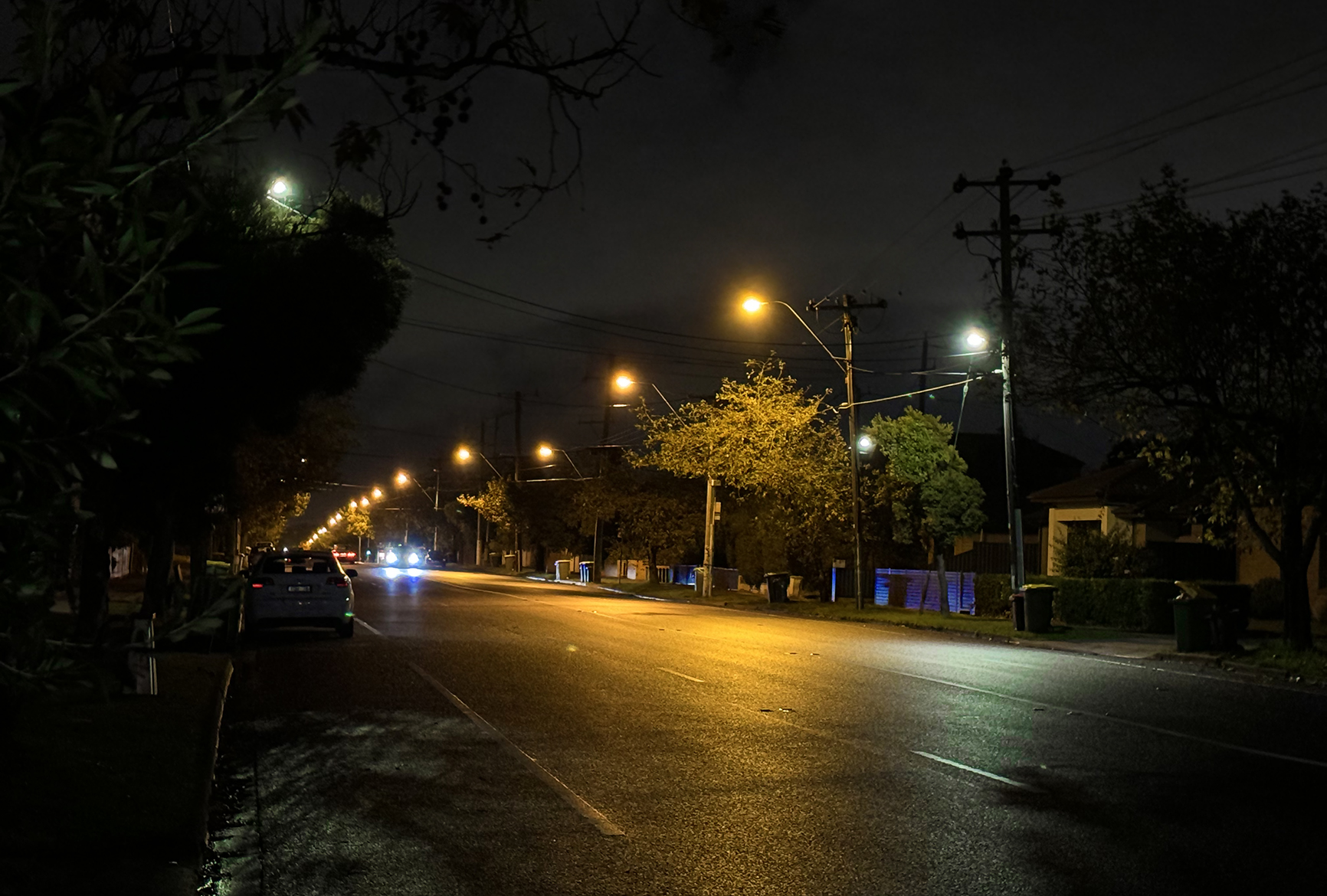
RAINY EVENING
A cold, rainy Autumn evening in Melbourne. Everyone (well almost!) is indoors quite cosy with the heater on and the electric blanket warming the bed...

This post is part of the Travel Tuesday meme.
Subscribe to:
Posts (Atom)